What does “strong immunity” actually mean?

I need to boost my immune system. This is probably one of the most commonly repeated phrases when the weather turns cold and people start talking about seasonal viruses. We say it with such confidence, as if the immune system had some kind of mechanical dial that we could simply turn up in October and turn back down to its original setting when spring arrives. But our bodies don’t work that way.
The immune system is an extremely complex and delicate network of cells, tissues, and organs that function continuously. It doesn’t wait for fall to get to work—it reacts every second to everything that happens to us and around us. That’s exactly why the idea of drastically boosting it with a single “miracle cure” is more of a catchy marketing slogan than an accurate and scientifically sound way to think about our health. The much more meaningful question we should ask ourselves is what we’re actually providing our bodies with on a daily basis so that they can perform their natural defense functions normally.
In this regard, there are no major surprises for our wellness culture, since balance is always based on restful sleep, a varied diet, regular exercise, adequate fluid intake, regular ventilation of indoor spaces, and good personal hygiene. However, there is also something less obvious but just as important: the decision not to let nutritional deficiencies build up over time. Our bodies need specific vitamins and minerals for the normal functioning of our immune system, among which vitamins C and D, as well as the mineral zinc, play a key role. When a deficiency is confirmed, correcting it in a timely manner has a much more concrete impact on our well-being than simply taking more and more random supplements in a panic.
This completely changes the way we should view supplements in the fall. They shouldn’t be seen as emergency supplies that we pull out of the closet at the first sign of a sneeze, but rather as part of a broader and ongoing self-care routine.
For example, vitamin D It plays a direct role in the normal functioning of the immune system and naturally draws our attention during the months when exposure to natural sunlight is minimal. However, scientific studies on whether supplemental intake reduces the risk of respiratory infections yield mixed results, with some studies finding a small potential effect, primarily in people with low levels of the vitamin, while others find no significant statistical benefit. It is precisely this distinction between a nutrient having a proven biochemical role in the body and the myth that it acts as a universal shield that is extremely important and provides a good reason to approach our choices with greater maturity.
The Formula Vitamin D3 + K2 by Alpha Life Sciences is a great example of a product that combines the “sunshine vitamin” in liquid form with vitamin K2, which supports bone health and normal blood clotting. Rather than being marketed as a seasonal solution, this product simply fits elegantly into a long-term daily routine.
With quercetin, the story is different—and even more interesting from a scientific perspective. This compound occurs naturally in a number of plants and foods and has been the subject of extensive research for years due to its antioxidant properties. Interest in it is also growing in connection with studies on inflammatory processes and the body’s responses to infections. Here, too, it’s best to let the scientific facts speak for themselves—based on the actual data—without turning the compound into a panacea.
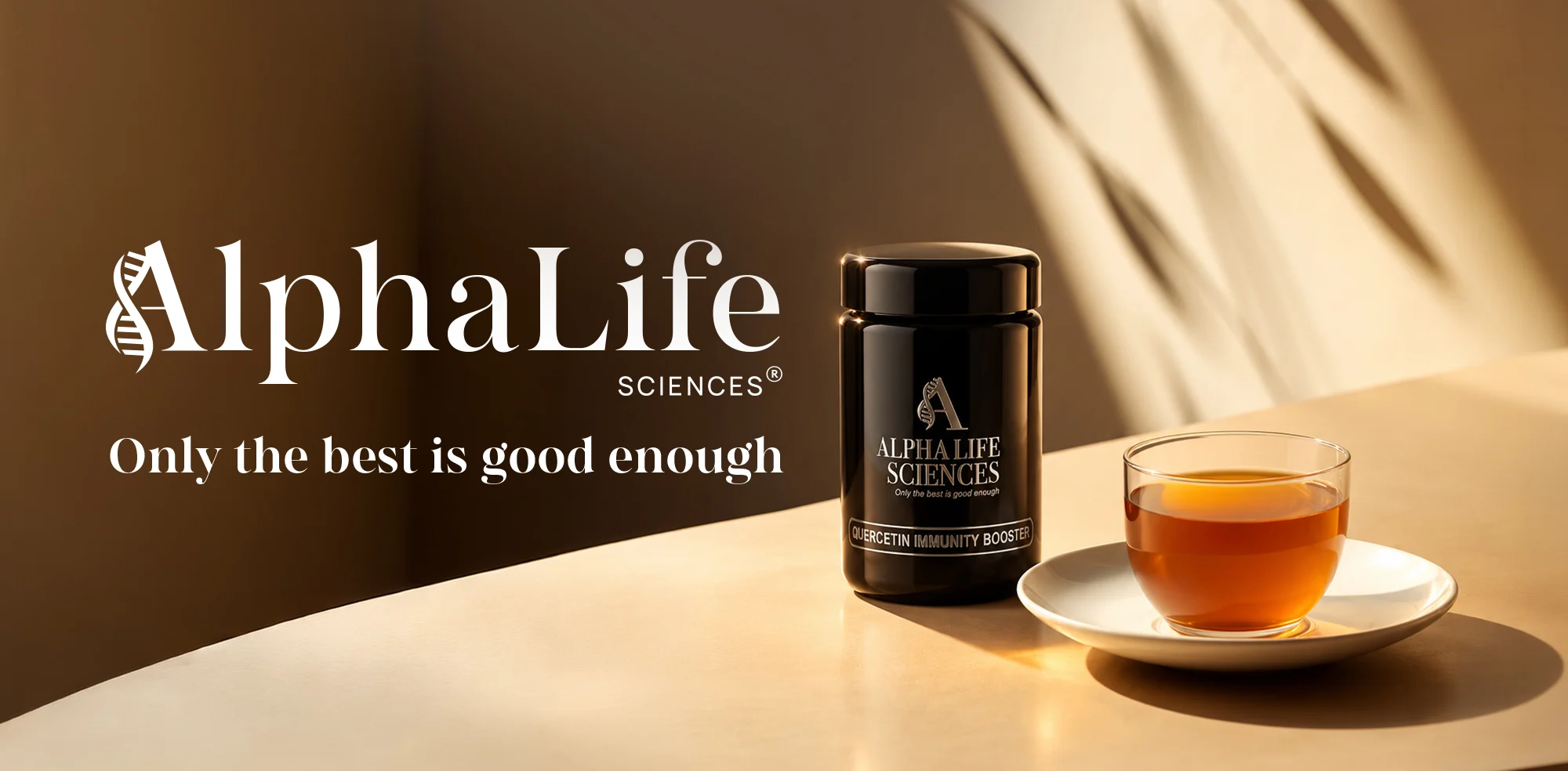
In the portfolio of Alpha Life Sciences , quercetin is featured in two different formulations, namely Quercetin Immunity Booster places the flavonoid at the core of the formula, while QuercetinPLUS enhances it with additional active ingredients for a more comprehensive effect. Thus, our choice is no longer just whether to take quercetin, but also which combination of active ingredients best suits our personal fall routine.
There is another important point that we rarely think about in the midst of fall. Our bodies don’t spend the cold months passively waiting for the next virus, because during this time, all other vital processes continue inside us, requiring significant resources—such as metabolism, cellular repair, protection against oxidative stress, and adaptation to changes in our routine. That is why a truly sensible approach to seasonal health care should never be limited to the word “immunity” alone.
This is exactly where the product’s unique selling point comes into play Milk Thistle PLUS from Alpha Life Sciences in the big picture. This Swiss formula combines milk thistle, turmeric, and dandelion with vitamins C, D3, and E, as well as zinc, helping us address seasonal health needs by addressing several different bodily needs at once.
This is perhaps the most helpful shift in the way we can think about this time of year. We don’t need to look for a magic ingredient or an aggressive strategy to quickly boost our defenses. It’s much more valuable to understand how our bodies work and what we can do to support them as a whole, because while viruses do have a season, our immune system doesn’t. And taking care of it makes real sense long before someone around us says they think they’re coming down with something.